Negative gearing from 1 July 2027: what counts as a new build
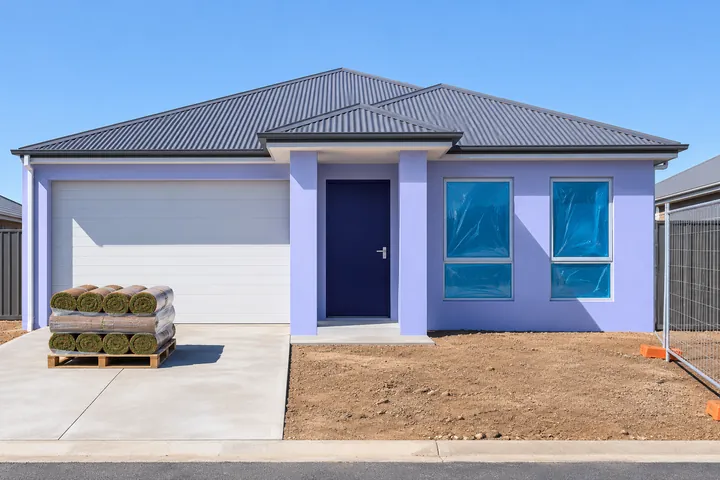
Imagery is illustrative.General information only.
Negative gearing has not been removed. From 1 July 2027 it is limited to new builds and to homes owned before Budget night. Budget night was 7:30pm Canberra time on 12 May 2026.
Who this affects
- Not affected: the home someone lives in. These rules are about investment properties.
- Not affected: investment homes already owned at 7:30pm on 12 May 2026, until they’re sold.
- Affected: existing homes bought as investments after that date. New builds keep the old rules.
- Affected: the profit on any investment property sold after 1 July 2027. Profit made before that date keeps the old rule.
What negative gearing means
A home is negatively geared when its rent is less than what it costs to keep. Costs include loan interest, rates, insurance, repairs and management fees. The owner pays the gap.
That gap is called a rental loss. Until now, a rental loss could reduce the tax paid on wages.
A rental loss is still money out of the owner’s pocket each year. The tax saving returns only part of it.
What is law and what is still a bill
| Change | Status on 17 November 2026 |
|---|---|
| Negative gearing limited to new builds, from 1 July 2027 | Law Tax Reform No. 1 Act 2026 |
| Capital gains discount replaced, from 1 July 2027 | Law The same Act |
| The detailed tests for what counts as a new build | Bill Tax Reform No. 3 Bill 2026. Passed the House on 29 October 2026. The Senate has not voted. |
On 13 November 2026 the Senate Economics Legislation Committee recommended the bill be passed. The Senate moved its second reading on 16 November 2026 and has not voted. The bill page shows no amendments.
Until the bill passes, the exact new-build tests aren’t in the law yet. Details can still change in the Senate.
Which homes keep negative gearing
It depends on 2 things: when the home was bought, and whether it is a new build.
- Homes owned before Budget night keep negative gearing until they are sold. That includes contracts signed, but not yet settled, by 7:30pm Canberra time on 12 May 2026.
- Homes held in super funds, including SMSFs, aren’t affected by the limit.
- Existing homes (not new builds) bought after Budget night keep it only until 30 June 2027. From then, the loss can only be taken off rent or profits from residential property. Any loss left over is kept for later years.
- New builds can be negatively geared before and after 1 July 2027, if they meet the tests below.
What counts as a new build
The tests come from the Tax Reform No. 3 Bill. They are not law yet. The one that matters most is the date on the home’s occupancy permit: the building surveyor’s sign-off that a home can be lived in.
Every new build must (a builder’s unsold home is the exception)
- be in Australia;
- have its occupancy permit (the bill calls it a certificate of occupancy) first issued at or after 7:30pm Canberra time on 12 May 2026;
- have its own title, so it can be sold on its own. Most granny flats don’t, so most don’t count.
And fit one of 4 cases
- Building on empty land. The owner buys land with no home on it and builds one. A house-and-land purchase with separate land and build contracts works this way. A finished home bought from a builder falls under the 24-month case.
- Adding homes. The owner ends up with more homes on the land than before.
- Converting a building. A building that wasn’t a home becomes one or more homes.
- Buying within 24 months. Someone buys a home that was new for the seller, within 24 months of its first occupancy permit.
Knocking down 1 house and building 1 in its place doesn’t count. Nor does a renovation that doesn’t add a home.
Questions worth asking about a new build
- When was the occupancy permit first issued?It needs to be at or after 7:30pm on 12 May 2026.
- Has the home been sold before? If so, when?A later buyer only qualifies within 24 months of that first permit.
- Does it add homes to the land?Replacing 1 house with 1 new house doesn’t count.
- Does the home have its own title?It must be able to be sold on its own. Most granny flats can’t.
A registered tax agent (many accountants are) can explain how the rules apply to a particular purchase.
Capital gains
This is the tax paid on the profit when an investment property is sold. From 1 July 2027:
- The 50% discount is replaced by an inflation adjustment. Only the part of the profit above inflation is taxed. This applies to individuals, trusts and partnerships.
- Individuals pay at least 30% on that profit. For people whose other income is already taxed at 30% or more, this changes nothing. People on the Age Pension, JobSeeker or a similar means-tested payment that year are exempt.
- Profit made before 1 July 2027 keeps the 50% discount, even if the home sells years later.
Under the law, an investor in a home that meets the new-build tests can choose the old 50% discount or the new method when they sell.
A worked example
3 made-up homes, each with an illustrative $8,000 rental loss in 2027–28.
| Home A | Home B | Home C | |
|---|---|---|---|
| What it is | Existing home, bought March 2026 | Existing home, bought September 2026 | New house on land bought empty, permit 2027, rented from then |
| Loss against wages? | Yes | No, from 1 July 2027 | Yes, if it meets the tests |
| What happens to the loss | Nothing changes | Used against residential property income; the rest carries forward | Nothing changes |
| Capital gains on sale | 50% discount to 1 July 2027, then the new method | 50% discount to 1 July 2027, then the new method | A choice of method |
In each case the $8,000 is real money paid by the owner. The rules only change how much of it comes back at tax time.
Common questions
Is negative gearing gone?
No. From 1 July 2027 it is limited to new builds and to homes owned before 7:30pm on 12 May 2026.
Is the new-build test law?
Not yet. The detailed tests are in the Tax Reform No. 3 Bill. It passed the House on 29 October 2026. On 13 November 2026 a Senate committee recommended it be passed, and the Senate has not voted.
Does a new home bought from its first owner count?
Under the bill, yes, if it is bought within 24 months of its first occupancy permit.
Where these facts come from
- Australian Taxation Office, “Tax reform: Boosting home ownership: Reforming negative gearing and capital gains tax”, updated 29 June 2026 (ato.gov.au)
- Australian Taxation Office, “Capital gains tax reform”, updated 13 October 2026 (ato.gov.au)
- Budget 2026–27 Tax Explainer: Negative Gearing and Capital Gains Tax Reform, 12 May 2026 (budget.gov.au)
- Parliament of Australia, Treasury Laws Amendment (Tax Reform No. 3) Bill 2026: bill page, Explanatory Memorandum (Schedule 5) and Bills Digest No. 24, 2026–27 (aph.gov.au)
- Senate Economics Legislation Committee report on the Tax Reform No. 3 Bill, 13 November 2026 (aph.gov.au)
This is general information about the law. It is not tax or financial advice. Bell Morgan is a licensed estate agent. We don’t give tax, financial, legal or credit advice.
Talk it through
with a licensed agent.
Leave your number and we call you back. We explain the homes available, the full cost, and how we’re paid, in writing.